The Google Maps Algorithm in 2026: What Actually Moves Your Ranking
For local businesses, Google Maps has become one of the most important sources of leads. Whether someone is searching for a dentist, restaurant, med spa, or marketing agency, the businesses that appear near the top of Google Maps often receive the majority of clicks, calls, and enquiries.
Unfortunately, many business owners still misunderstand how Google Maps rankings work. Some believe reviews are the only factor that matters. Others think proximity alone determines who appears first. The reality is far more complex.
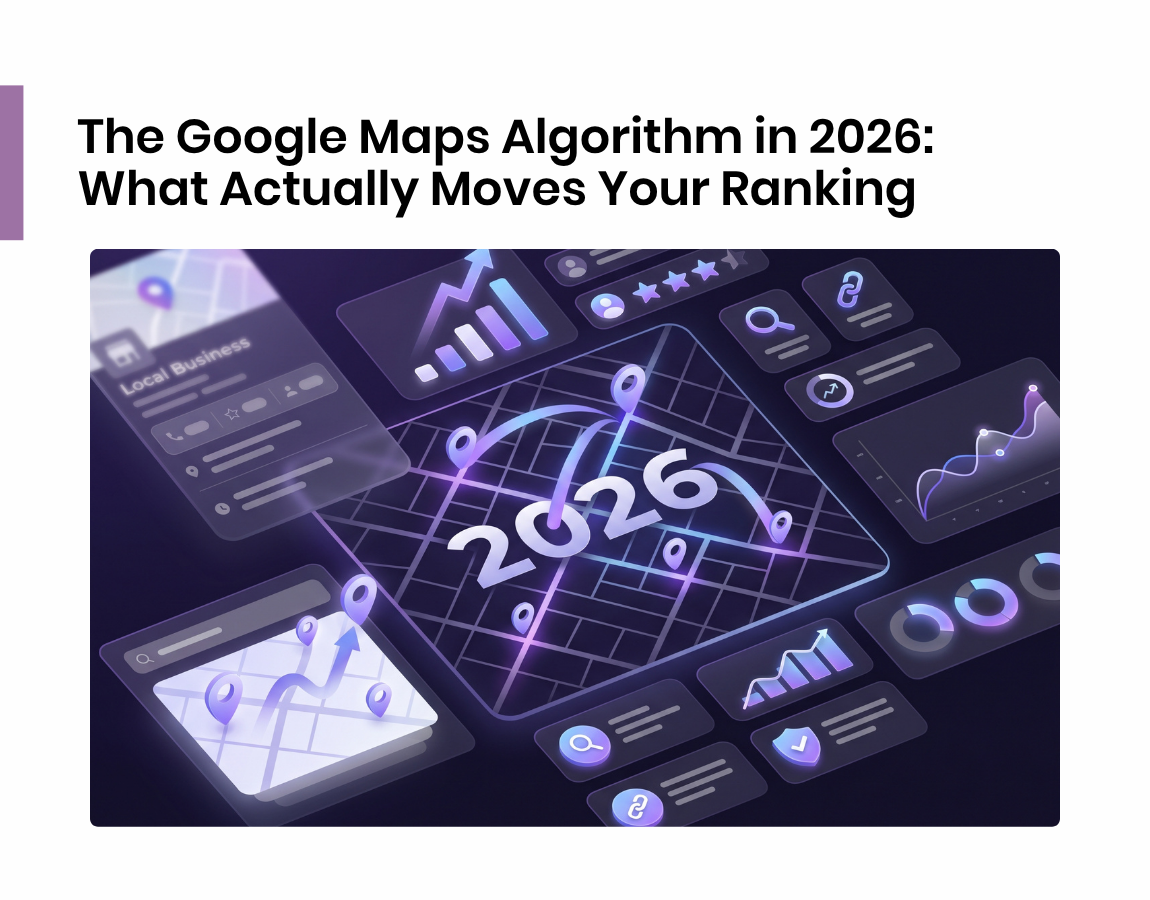
In 2026, Google Maps rankings are influenced by a combination of relevance, authority, engagement, and trust signals. Businesses that understand how these factors work together are far more likely to maintain strong local visibility. In this article, we’ll take a closer look at what actually moves your ranking.
Relevance is Still the Leading Signal
Google’s primary goal is to connect users with businesses that best match their search intent. This is why relevance remains one of the strongest ranking factors in Google Maps. Your Google Business Profile should clearly communicate what your business does. This starts with selecting the most appropriate primary and secondary categories. Many businesses overlook this step, yet it plays a major role in helping Google understand which searches your business should appear for.
Your services, products, business description, and website content also contribute to relevance. The more clearly you explain your products, the easier it becomes for Google to connect your business with potential customers. Location-specific content can further strengthen relevance. Businesses that create pages focused on their areas of specialty often provide stronger signals than competitors relying solely on a generic website.
Reviews Don’t Work the Way You Think
Reviews remain important, but not simply because of the total number you have. Many businesses become obsessed with accumulating reviews while ignoring other important factors. In reality, Google appears to place significant value on review quality, consistency, and recency.A steady flow of genuine reviews often sends a stronger signal than receiving dozens in a short period and then none for months.
Fresh reviews suggest the business remains active and continues delivering positive customer experiences. The content of reviews matters as well. Customers naturally mention products, services, and locations in their feedback. These references help Google build a stronger understanding of what your business is known for. Responding to reviews is equally important. It demonstrates engagement and shows potential customers that you value feedback. While responses alone will not dramatically improve rankings, they contribute to the overall trust signals associated with your profile.
Website Signals Have a Big Impact
Many business owners treat Google Maps and SEO as completely separate strategies. In reality, they work hand-in-hand. Your website helps Google verify the information contained within your Google Business Profile. It also provides additional signals about your expertise, authority, and relevance.
Strong local landing pages can reinforce the areas you serve. Detailed service pages help Google understand your offerings. Consistent business information across your website strengthens trust and reduces confusion. Website authority also plays an important role. Businesses with strong backlinking, useful content, and established credibility often perform better in Google Maps than competitors with weak websites.
This is one reason why some businesses struggle to improve Maps rankings despite having excellent reviews. Their Google Business Profile may be strong, but their website fails to provide the supporting signals Google is looking for.
Engagement and User Behaviour Are Crucial
Google wants to recommend businesses that users find helpful. As a result, engagement signals are becoming even more valuable. Every interaction with your Google Business Profile provides information about how users respond to your listing. This includes website clicks, phone calls, direction requests, photo views, and other profile interactions. Businesses that receive strong engagement often signal to Google that users find their listing relevant and useful.
This is why active profiles frequently outperform neglected ones. Regularly updating photos, adding posts, updating services, and keeping business information accurate all contribute to stronger engagement. Profiles with fresh, relevant images tend to attract more interactions than those with outdated or limited visual content.
Final Thoughts
There is no single factor that determines Google Maps rankings in 2026. Success comes from building strong relevance, earning quality reviews, maintaining a trustworthy website, encouraging engagement, and ensuring consistency across the web. Consistency is essential because Google wants to be confident that your business information is accurate. When your business name, address, and phone number appear consistently across directories and online listings, it becomes easier for search engines to trust that information.
Businesses that focus on only one ranking factor often struggle to maintain long-term visibility. And the ones that consistently appear at the top of local search results understand that Google Maps optimisation requires a complete strategy.
At VF Agency, we help businesses improve their local visibility through data-driven SEO, Google Business Profile optimisation, and proven local search strategies. We also get your business added to reputable online listings and ensure a consistent approach across your online footprint.
If you want to attract more local customers and improve your Google Maps rankings, follow this link to schedule a virtual one-on-one consultation.